

Electric Insulator Market Dynamics, Segments, Trends and Technology Hit Growth to USD 45.88 Billion by 2035
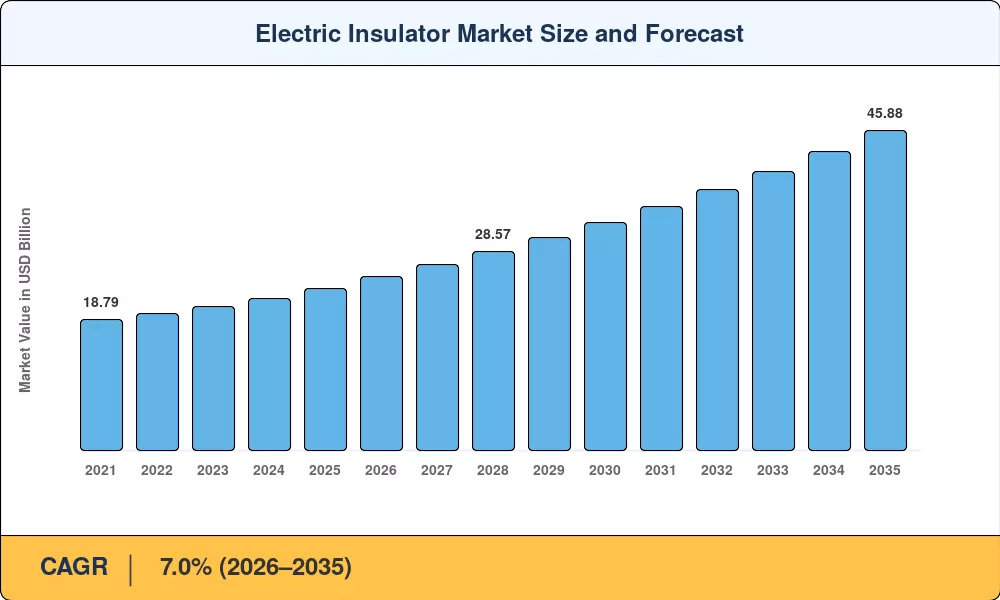
Electric Insulator Market Summary
Asia-Pacific held roughly 57.8% of the Electric Insulator Market in 2025, with China and India together driving more than two-thirds of regional demand.
Ceramic and porcelain insulators captured approximately 48.2% of the Electric Insulator Market share in 2025, underpinned by long service life and lower unit cost for standard distribution voltages.”
NY, CA, UNITED STATES, July 15, 2026 /EINPresswire.com/ -- Electric insulators are critical components in electrical power systems designed to prevent the unwanted flow of current between conductors and their supports, ensuring the safe and reliable transmission and distribution of electricity. These devices provide mechanical support and electrical isolation for overhead power lines, substations, and switchgear, operating across a wide range of voltage classes from low-voltage distribution to extra-high-voltage transmission.— Arti Dhapte
Electric Insulator Market Overview
The Electric Insulator Market share reached an estimated USD 23.28 Billion in 2025 and is projected to climb from USD 24.95 Billion in 2026 to USD 45.88 Billion by 2035, advancing at a compound annual growth rate of 7.0% across the forecast period. This expansion is anchored in two converging forces: a global wave of grid-hardening investments exceeding USD 680 Billion through the decade, and the accelerating build-out of ultra-high-voltage direct-current corridors connecting renewable generation hubs to urban load centers. Utilities across mature and developing economies alike are replacing aging insulator fleets installed during the mid-twentieth-century electrification cycle, while new HVDC interconnections demand insulator specifications that legacy ceramic designs struggle to meet.
The market is experiencing robust growth driven by several key factors. The expansion of ultra-high-voltage (UHV) and high-voltage direct-current (HVDC) corridors, particularly in Asia-Pacific, is creating unprecedented demand for specialized insulator strings. China's State Grid Corporation committed over USD 28 billion to UHV transmission between 2023 and 2025, driving the largest single source of insulator procurement globally. Grid-hardening and wildfire mitigation investments in North America and Australia have accelerated replacement cycles, with utilities in fire-prone regions replacing legacy ceramic units with pollution-resistant composite designs. Renewable energy evacuation infrastructure, including India's Green Energy Corridor Phase II and Brazil's north-south transmission links, further catalyzes demand for high-voltage composite units.
Industry trends indicate a significant technology shift from traditional ceramic and glass insulators to lightweight composite polymer designs. Silicone-rubber composite insulators weigh 70–80% less than porcelain equivalents and offer superior pollution resistance, making them ideal for HVDC corridors and environments with high contamination levels. The aging insulator replacement cycle across mature OECD markets creates concentrated procurement opportunities, while the electrification of transport corridors generates new demand for catenary-grade insulators in high-speed rail and EV charging infrastructure.
Technological developments are reshaping the market landscape. Smart sensor-integrated insulators with embedded IoT leakage-current sensors and GPS-enabled asset tags enable condition-monitoring-as-a-service business models, with pilot installations reporting 35% savings in unplanned outages. AI-enabled predictive maintenance systems trained on leakage-current waveforms and thermal imaging are moving from pilot to production deployment, with EPRI projecting a 45% reduction in flashover-related outages on instrumented circuits by 2030. HVDC super-grid interconnections, including Europe's SuperGrid and the Australia-Singapore Sun Cable, require specialized DC insulators that command 2-3x price premiums over standard AC equivalents.
Policy and regulatory influence continues to shape market dynamics. The U.S. Department of Energy's Building a Better Grid Initiative allocates USD 20 billion to transmission modernization. The European Commission's TEN-E infrastructure mandates support cross-border HVDC corridors and offshore wind interconnections. India's Green Energy Corridor Phase II and China's 14th and 15th Five-Year Plans create multi-year procurement pipelines. The IEC published the third revision of IEC 62217 in 2024, introducing mandatory 10,000-hour accelerated-aging tests for composite insulators above 245 kV, tightening market-entry barriers.
Asia-Pacific commands the dominant position in the electric insulator market with approximately 57.8% of global revenue in 2025, propelled by China's UHV program and India's renewable-evacuation corridors. Europe holds the second-largest share at roughly 15.6%, driven by offshore wind interconnections and TEN-E mandates. North America's share stands near 17.4%, supported by federal grid-modernization legislation and wildfire-mitigation insulator upgrades.
Get Free Sample Report for Detailed Market Insights:
https://www.marketresearchfuture.com/sample_request/6969
Electric Insulator Market Segmentation
By Dielectric Material
Ceramic/Porcelain: Captured approximately 48.2% of market share in 2025, underpinned by long service life and lower unit cost for standard distribution voltages
Glass: Valued at USD 3.96 billion in 2025, with demand for toughened-glass insulators in self-cleaning applications
Composite/Polymer: Forecast to register the fastest segment CAGR of 8.3% between 2026 and 2035, driven by weight savings and pollution resistance for HVDC corridors
By Voltage Rating
Low Voltage: Valued at USD 3.15 billion, serving residential and commercial distribution
Medium Voltage: Accounted for 42.8% share, driven by urban distribution grid density
High Voltage: Growing at 7.4% CAGR for renewable integration at 220–400 kV
Extra- and Ultra-High Voltage: Fastest-growing segment at 8.4% CAGR, driven by UHV DC/AC corridors above 765 kV
By Installation Environment
Outdoor: Held 68.2% share, reflecting global overhead transmission and distribution lines
Indoor: Growing at 5.8% CAGR for GIS substations and switchgear enclosures
By Application
Transmission Lines: Led with approximately 44.5% share, with HVDC sub-applications expected to outpace the overall segment
Substations and Switchgear: Growing at 7.1% CAGR driven by GIS adoption and transformer bushing upgrades
Other Applications: Valued at USD 3.42 billion, including railway catenary, industrial plants, and telecom
By End User
Utilities: Dominated with 66.5% share through regulated CAPEX programs for T&D expansion
Industrial: Growing at 7.5% CAGR, driven by data centers, mining, and heavy manufacturing
Residential and Other: Valued at USD 2.68 billion for rural electrification and distributed generation
Competitive Landscape / Key Players
The electric insulator market exhibits moderate concentration, with the top five manufacturers capturing an estimated 32–38% of global revenue. Competition has intensified as Chinese manufacturers scale composite production at landed costs roughly half those of Western incumbents, prompting IEC 62217 standard tightening and extended utility pre-qualification audits in OECD markets.
ABB Ltd (~8-11% revenue share): Offers HV/EHV composite and porcelain bushings, GIS insulators, with integrated grid solutions and digital monitoring capabilities.
Siemens Energy (~7-10%): Provides transformer bushings, GIS insulators, and HVDC components with an end-to-end T&D portfolio across voltage classes.
GE Vernova (~6-9%): Manufactures porcelain and composite line insulators, substation bushings with scale manufacturing and global service footprint.
NGK Insulators (~5-8%): Specializes in porcelain long-rod and suspension insulators, NAS batteries, leveraging Japanese quality heritage and diversified ceramics base.
Hubbell Incorporated (~4-7%): Focuses on distribution-class porcelain and polymer insulators with a strong North American utility distribution channel.
Other notable players include Seves Group (Sediver), TE Connectivity, Dalian Insulator Group, Zhejiang TCI, Aditya Birla Insulators, and MacLean Power Systems. Recent developments include Hubbell's acquisition of a U.S.-based polymer insulator startup specializing in sensor-embedded designs for wildfire-zone applications.
You can buy this market report at:
https://www.marketresearchfuture.com/checkout?currency=one_user-USD&report_id=6969
Electric Insulator Market Regional Analysis
Asia-Pacific
Asia-Pacific held roughly 57.8% of the electric insulator market in 2025, with China and India together driving more than two-thirds of regional demand. China alone represents approximately 34.2% of the global market, with State Grid Corporation deploying 38 operational UHV lines as of 2025 and 14 more under construction. India's Green Energy Corridor Phase II envisions 10,750 circuit-km of new 765 kV transmission, creating the region's second-largest procurement pipeline. Japan's grid resilience post-Noto earthquake and South Korea's offshore wind grid integration contribute supplementary demand. ASEAN nations, including Vietnam and the Philippines, are adding more than 35,000 circuit-km of 220–500 kV lines by 2032, driving an 8.2% CAGR.
Europe
Europe holds the second-largest share at roughly 15.6% of global revenue. Germany leads with USD 0.98 billion in 2025, driven by the SuedLink and SuedOstLink HVDC corridors installing over 4,000 km of ±525 kV DC lines by 2030. The United Kingdom's offshore wind target of 50 GW by 2030 necessitates subsea-to-onshore HVAC cable terminations and GIS bushing insulators. The Nordic region is expanding cross-border HVDC interties including NordLink, NordBalt, and the planned Hansa PowerBridge. The EU's TEN-E infrastructure mandates support cross-border corridors and cohesion-fund grid upgrades across Eastern Europe.
North America
North America's share stood at 17.4% in 2025, supported by federal grid-modernization legislation and wildfire-mitigation insulator upgrades. The United States anchors regional demand with a 7.6% CAGR, driven by the Department of Energy's Building a Better Grid Initiative channeling USD 20 billion into new and upgraded transmission corridors through 2030. California's wildfire-driven insulator replacement programs and ERCOT's grid-resilience investments have compressed procurement timelines. Canada's interprovincial hydro interties and Mexico's CFE modernization contribute supplementary demand, though at smaller absolute scales.
Rest of the World
South America holds approximately 5.2% share, with Brazil driving over 60% of regional revenue through ANEEL-regulated transmission auctions awarding 3,000–5,000 km of new 500 kV lines annually. The Middle East & Africa region represents the smallest but increasingly dynamic slice at 4.0% share, with Saudi Arabia's NEOM and Vision 2030 grid build-out and South Africa's Eskom rehabilitation program. Sub-Saharan African nations are progressing rural electrification programs under the African Development Bank's Desert-to-Power initiative, creating high-volume, cost-sensitive insulator demand.
Latest Industry News & Developments
IEC (November 2024): Published the third revision of IEC 62217, introducing mandatory 10,000-hour accelerated-aging tests for composite insulators above 245 kV, tightening market-entry barriers for uncertified manufacturers.
Hubbell Incorporated (2024): Acquired a U.S.-based polymer insulator startup specializing in sensor-embedded designs for wildfire-zone applications, expanding its smart-grid product portfolio.
Pacific Gas & Electric (2024): Committed USD 5.4 billion for system hardening, including replacement of more than 250,000 ceramic insulator units with pollution-resistant composite designs in high-fire-threat zones.
Electric Insulator Market Challenges & Opportunities
Key Restraints
Raw-material price volatility, with silicone rubber experiencing 18–25% price swings between 2022-2024 and alumina trihydrate filler costs tracking similar volatility, compresses manufacturer margins and delays utility procurement decisions. Extended pre-qualification audit timelines exceeding 18 months in OECD markets restrict market access for newer manufacturers and slow adoption of innovative designs. Quality disputes and safety recalls following field failures of substandard composite housings have eroded confidence in certain Asian exports. Underground cabling substitution in dense urban areas eliminates overhead insulator demand entirely, with European DSOs reporting 32% of new medium-voltage circuits installed in 2023 were underground, projected to reach 40% by 2030. Fragmented testing and certification standards across trade blocs create compliance cost burdens for global suppliers.
Emerging Opportunities
Smart sensor-integrated insulators with embedded IoT sensors enable condition-monitoring-as-a-service business models, creating high-margin upselling opportunities. Africa and Southeast Asia rural electrification presents the largest untapped volume opportunity, with sub-Saharan Africa's electrification rate still below 50% and Southeast Asian countries adding 35,000 circuit-km of lines. HVDC super-grid interconnections require specialized DC insulators with 2-3x price premiums over standard AC equivalents. Recycling and circular-economy business models for spent porcelain and glass insulators recover USD 120-180 per tonne of alumina and borosilicate content, reducing procurement costs and meeting tightening ESG standards. EV charging infrastructure insulation for medium-voltage distribution upgrades at charging hubs offers diversification beyond traditional utility procurement.
Future Potential
AI-enabled predictive insulator maintenance is moving from pilot to production, reducing flashover-related outages by 45% on instrumented circuits by 2030. HVDC super-grid economics position the market to capture a meaningful share of the IEA's projected USD 1.2 trillion cumulative investment in multi-terminal HVDC networks by 2040. The electrification supercycle, with global electrification capital spending exceeding USD 2.8 trillion annually by 2030, generates distribution-level insulator demand that did not exist a decade ago. ESG reporting and circular procurement requirements are pushing utilities to demand lifecycle carbon assessments, rewarding manufacturers offering recycled-content porcelain or bio-based silicone compounds with procurement scoring advantages.
To explore more market insights, visit us at:
https://www.marketresearchfuture.com/reports/electric-insulator-market-6969
The global Electric Insulator Market is positioned for sustained growth, with projections indicating expansion from USD 24.95 billion in 2026 to USD 45.88 billion by 2035 at a 7.0% CAGR. Market dynamics are driven by the convergence of grid-hardening investments, UHV and HVDC corridor expansion, and renewable energy evacuation infrastructure. The shift from legacy ceramic and glass designs to lightweight, pollution-resistant composite polymer insulators is transforming the market landscape.
Asia-Pacific dominates with approximately 57.8% market share, with China and India driving unprecedented procurement volumes through state-backed transmission programs. Europe and North America follow with significant shares supported by offshore wind interconnections and grid-modernization legislation. While challenges including raw material volatility and extended pre-qualification audits persist, the long-term industry outlook remains robust, supported by the essential role of electric insulators in enabling reliable, resilient, and decarbonized power grids for the energy transition supercycle. The decade ahead will test how quickly utilities transition procurement cycles toward composite solutions and how regulatory bodies harmonize testing standards across trade blocs.
More Related Reports from MRFR Library:
Meter Data Management System Market https://www.marketresearchfuture.com/reports/meter-data-management-system-market-32122
Micro gas Turbine Market https://www.marketresearchfuture.com/reports/micro-gas-turbine-market-32128
Mobile Battery Energy Storage System Market https://www.marketresearchfuture.com/reports/mobile-battery-energy-storage-system-market-32131
Modular Inverter Market https://www.marketresearchfuture.com/reports/modular-inverter-market-32139
Nuclear Waste Recycling Market https://www.marketresearchfuture.com/reports/nuclear-waste-recycling-market-32143
Medium Voltage Digital Substation Market https://www.marketresearchfuture.com/reports/medium-voltage-digital-substation-market-32169
Offshore Marine Emission Control System Market https://www.marketresearchfuture.com/reports/offshore-marine-emission-control-system-market-32176
Industrial Electrical Bushing Market https://www.marketresearchfuture.com/reports/industrial-electrical-bushing-market-32215
Power Distribution Vacuum Circuit Breaker Market https://www.marketresearchfuture.com/reports/power-distribution-vacuum-circuit-breaker-market-32272
Power Generation Carbon Capture and Storage Market https://www.marketresearchfuture.com/reports/power-generation-carbon-capture-and-storage-market-32273
Larry Wilson
WantStats Research And Media Pvt. Ltd.
+1 855-661-4441
email us here
Visit us on social media:
LinkedIn
Facebook
YouTube
X
Legal Disclaimer:
EIN Presswire provides this news content "as is" without warranty of any kind. We do not accept any responsibility or liability for the accuracy, content, images, videos, licenses, completeness, legality, or reliability of the information contained in this article. If you have any complaints or copyright issues related to this article, kindly contact the author above.
