

What African Buyers Should Ask a China Reliable Maize Mill Machine Supplier Like Burt Machinery
African Buyers Should Begin with Products, Capacity, Site, and Service
Evaluating a supplier effectively means establishing a clear baseline of your specific project requirements. Before a supplier can provide an accurate quotation, they need to understand the raw materials, the expected daily output, and the target end products, whether that is fine flour or coarse grits. The dimensions of the available workshop and the local voltage standards are equally critical, as these factors directly dictate the physical layout and electrical configuration of the milling plant.
When a supplier requests these details upfront, it demonstrates a commitment to designing a system tailored to actual project conditions rather than relying on generalized assumptions. For example, Burt Machinery collects detailed information on capacity, flour fineness, workshop size, and local voltage before issuing a quote. Their maize milling equipment covers a broad range of production scales, including 5–10T/24H, 20–30T/24H, 50T/24H, 20–100T/D, and 100–200TPD configurations. This extensive range provides buyers with comparable options suitable for various investment levels, from small community mills to large-scale industrial operations. Clarifying packaging and service requirements early in the process ensures that the final equipment configuration accurately reflects the buyer's operational goals and budget.
Which Capacity Fits the Business Model and Available Workshop
Selecting the correct production capacity is not merely about choosing the machine with the highest nominal output; it requires a strategic alignment with the business model and available resources. Buyers must evaluate their stable raw material supply, planned daily operating hours, projected sales volume, and the physical constraints of their workshop. Furthermore, the availability of public utilities, such as stable electricity and water, along with the planned staffing levels, must be factored into the capacity decision.
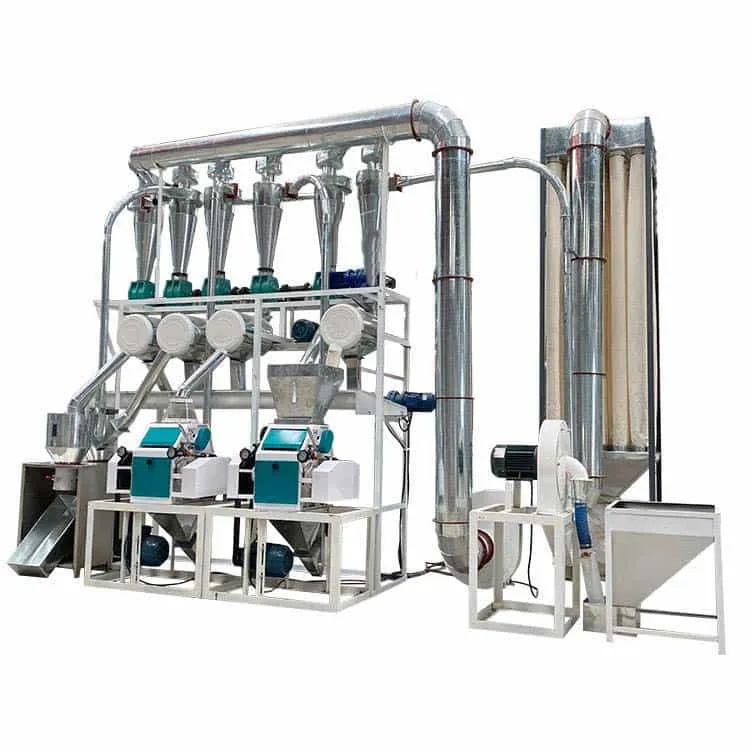
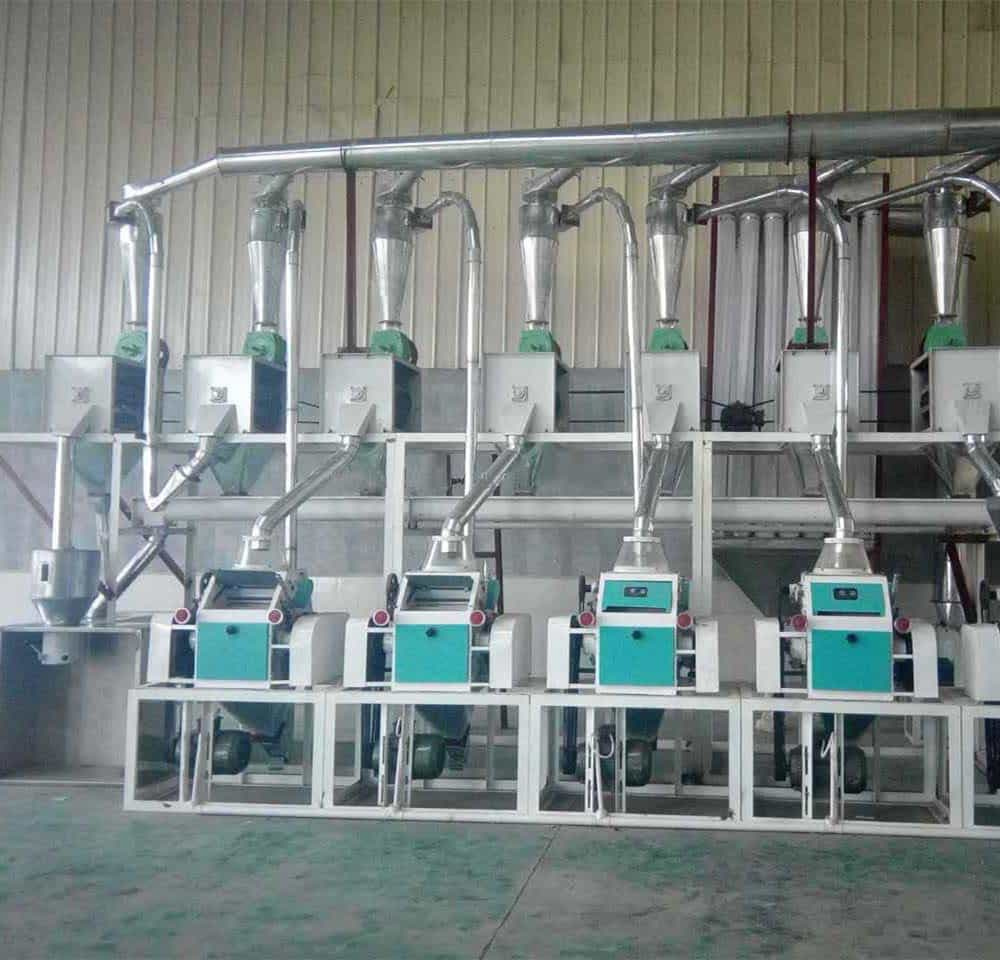
For smaller operations or those entering the market, a 10T Small Maize Milling Machine offers a practical starting point, requiring less space and lower initial investment. As businesses scale, the 5–50T/24H series provides differentiated options—such as 5–10T, 20–30T, and 50T/24H—each with specific workshop footprint requirements. For major industrial projects, the 100–200TPD automated production lines deliver high-volume processing capabilities. These larger systems are custom-designed based on the client's precise raw material characteristics, desired capacity, available site layout, and target product specifications. Matching capacity to actual operational realities ensures efficient production and a stronger return on investment.
Can One Line Produce Flour, Meal, Grits, and Different Sizes
Market demands in the grain processing sector are rarely one-dimensional. Buyers must determine early on whether they need to produce a single product or a diverse range of milled outputs. A critical question to ask any supplier is whether their proposed production line can simultaneously produce maize flour, maize meal, maize grits, and different particle sizes. The ability to diversify output depends entirely on the specific grinding and sifting configurations integrated into the processing line.
Advanced milling systems are engineered to offer multi-product capabilities, allowing a single line to yield various granulations simultaneously. This flexibility provides a crucial advantage for businesses targeting diverse consumer preferences or supplying different segments of the food industry. For instance, a 20TPD sifted production line can be configured to process low-fat maize grits, maize meal, and fine maize flour. Similarly, the 5–50T/24H series covers multiple market-oriented finished products. By planning the product mix during the equipment selection phase, buyers can ensure that the grinding and sifting components are perfectly matched to their target market, rather than discovering limitations after installation.
What Equipment and Process Stages Are Included in the Quote
A transparent and comprehensive quotation is the foundation of a successful procurement process. Buyers must insist on a detailed breakdown of all equipment and process stages included in the proposed price. A complete milling quote should explicitly cover raw material storage or feeding, cleaning, destoning, magnetic separation, dampening, peeling or degerming, milling, sifting, conveying, packaging, and the central control system. Missing components can lead to unexpected costs and operational bottlenecks later on.
To verify the scope of supply, buyers can reference standard industrial configurations. A complete 100–200TPD maize flour mill production line, for example, integrates storage, cleaning, dampening, peeling and germ extraction, milling, packaging, and stacking into a cohesive workflow. Reviewing the equipment list for a 50TPD plant provides further clarity, detailing specific components such as vibration sieves, destoners, magnetic separators, degerming machines, roller mills, sifting equipment, and packaging machinery. Using these comprehensive lists as a benchmark allows buyers to check quotes item by item, ensuring that every necessary process stage is covered and that the supplier's technical responsibilities are clearly defined.
What Testing, Installation, Training, and Warranty Are Documented
The relationship with a supplier extends far beyond the delivery of machinery. The reliability of a Commercial Maize Mill Machine Supplier is proven through their documented commitment to post-sales support. Buyers must carefully review the terms surrounding factory testing, the provision of operational manuals, installation responsibilities, worker training, commissioning, maintenance support, spare parts availability, and the precise boundaries of the warranty.
A responsible supplier ensures that all equipment undergoes rigorous testing and adjustment prior to delivery, accompanied by comprehensive operation videos and technical documentation. Furthermore, professional engineers should be available to travel overseas to supervise the installation process and conduct hands-on training for local workers. Documenting these services, along with a clear one-year warranty on the complete machine and clearly defined terms for separate overseas installation services, establishes a transparent commercial framework. This clarity protects the project budget, defines site responsibilities, and ensures that prompt technical support is available when needed.
Burt Machinery Gives Buyers a Documented Basis for Technical Questions
Navigating the complexities of procuring industrial milling equipment requires a structured approach to supplier evaluation. Hanzhong Burt Machinery Equipment Co., Ltd. provides African buyers with a clear, documented framework for technical review, centering on capacity, finished products, process scope, site conditions, testing, installation, training, and warranty terms.
Their detailed product and project documentation provides explicit capacity ratings and process descriptions, while their service protocols clearly outline pre-quotation requirements, testing procedures, and after-sales support. This structured approach allows buyers to compare suppliers on a unified, technical basis. By enabling buyers to submit precise details regarding their country's voltage, climate, workshop dimensions, raw materials, and service expectations, the supplier avoids treating diverse African markets as a single, uniform environment. For a tailored consultation and to explore equipment solutions that match your specific project requirements, visit their official website at https://www.burtmachinery.com/.
Hanzhong Burt Machinery Equipment Co., Ltd.
Burt Machinery
email us here
Visit us on social media:
LinkedIn
Facebook
YouTube
Legal Disclaimer:
EIN Presswire provides this news content "as is" without warranty of any kind. We do not accept any responsibility or liability for the accuracy, content, images, videos, licenses, completeness, legality, or reliability of the information contained in this article. If you have any complaints or copyright issues related to this article, kindly contact the author above.
