Hybrid Inverter Solution by Shenzhen SST Power for Export Power System Projects
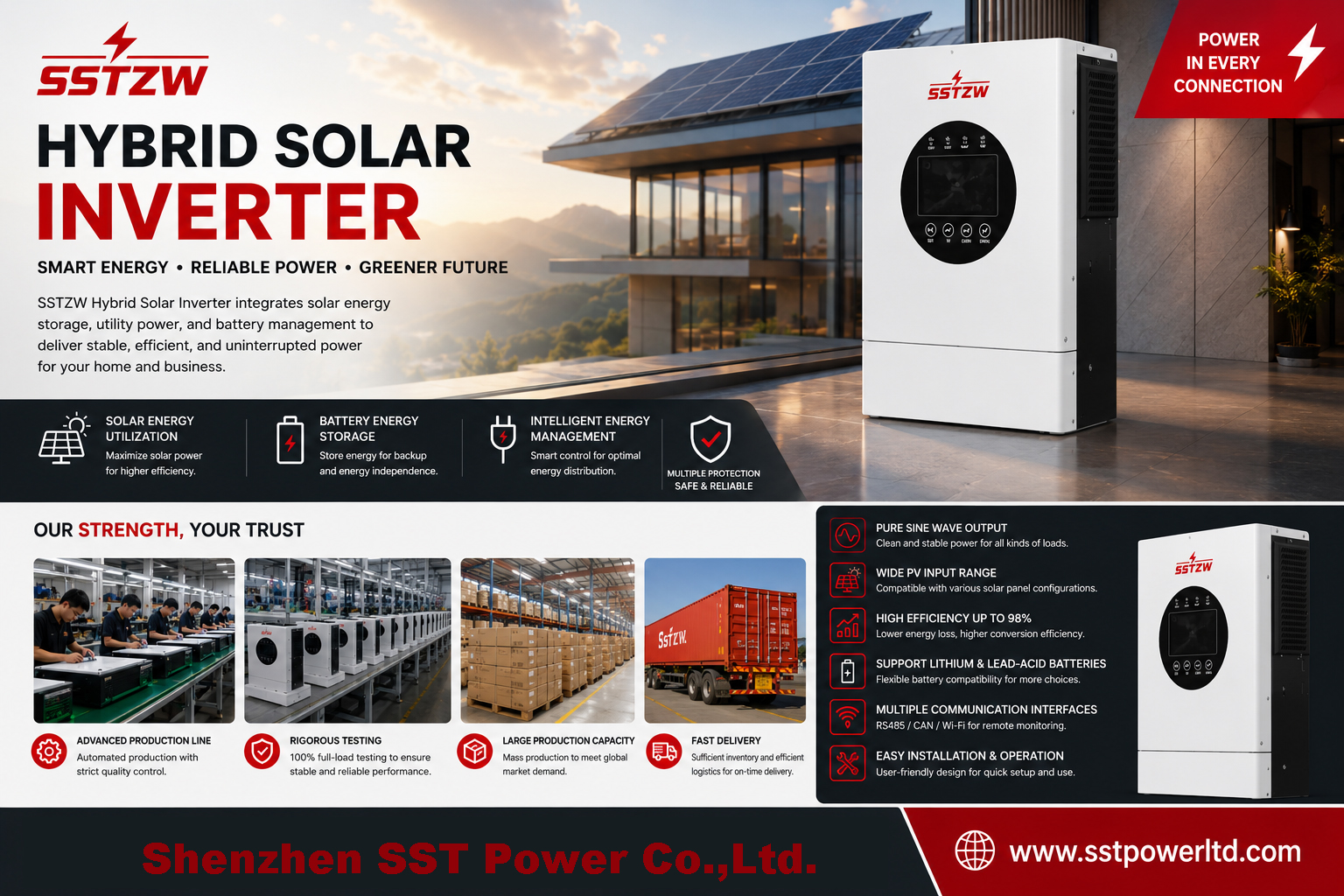
SHENZHEN, GUANGDONG, CHINA, August 9, 2026 /EINPresswire.com/ -- For engineering teams sourcing power equipment across borders, the difficult part of an inverter decision seldom lives in the datasheet. It lives in the gap between a destination grid and a product catalog. Voltage standard, phase arrangement, load rating, and permitted output deviation shift from one market to the next, so a unit that runs cleanly in one country can be a poor match a border away. A Custom Hybrid Inverter Solution answers that gap not by forcing one model to serve every site, but by translating project-specific electrical inputs into a workable equipment configuration. Shenzhen SST Power builds its hybrid inverter range on exactly that logic, pairing single-phase and split-phase platforms with defined power ratings and a stated output accuracy so export projects can weigh options against verifiable limits rather than broad claims.
Export Project Requirements Define the Hybrid Inverter Configuration
The first judgment on any export project is rarely the model number. It is the phase system and rated voltage the destination demands. A 120VAC single-phase site, a 115/230VAC split-phase system, and a 208 to 240VAC single-phase installation each point toward a different equipment path, and locking those conditions before selecting a unit prevents the most common and most costly sourcing mistake. Power boundaries come next, because rated output decides how much load a platform can carry. The single-phase hybrid inverter series from Shenzhen SST Power spans roughly 3,600 to 5,500 W, while the split-phase series extends from 3,000 W up to 12,000 W, giving projects a clear ladder to match against measured demand. Output quality rounds out the picture: the listed hybrid inverters carry a rated output accuracy of plus or minus 5 percent, a figure that belongs in the technical conversation alongside load character and final documentation, not as a blanket promise across every configuration.
Single-Phase Platforms Cover 120VAC and 208-240VAC Applications
Two single-phase platforms handle different voltage environments under one family name, and treating them as interchangeable is where configurations go wrong. Projects on a 120VAC standard can start from the US-standard single-phase hybrid inverter, where the power range and a 120VAC rated output form a clean starting combination for lighting, small motor, and general backup loads. Installations on 208, 220, 230, or 240VAC supply draw on a second single-phase group built for those higher nominal voltages. Both are single-phase hybrid inverter platforms, yet the electrical conditions they serve are not the same. Correct configuration is not a matter of simply scaling up wattage. It means matching the voltage standard first, then narrowing the power rating to the continuous load and capacity the site actually needs. Naming the two platforms separately keeps that distinction visible instead of hiding two different electrical envelopes behind a shared label.
Split-Phase Hybrid Inverters Extend Capacity for 115/230VAC Systems
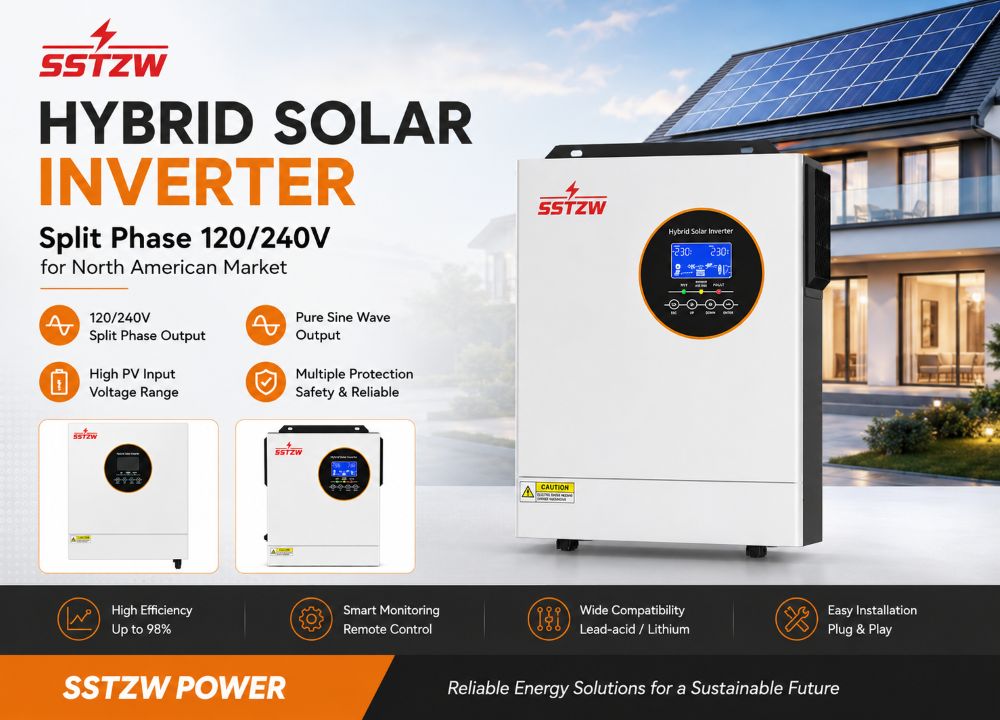
Where a project needs two usable voltages from one supply path, the split-phase hybrid inverter earns its place. The US-standard split-phase design from Shenzhen SST Power takes a 240VAC split-phase input and delivers both 115VAC and 230VAC outputs, a configuration common in North American style residential and light commercial systems that run mixed equipment. Capacity scales across the same 3,000 to 12,000 W window that defines the split-phase range, so a project can enter the appropriate band by real load size rather than lean on a vague description of high power. The units carry the same rated output accuracy of plus or minus 5 percent seen across the hybrid line. Expressing the platform in those terms, a defined input, a defined dual output, and a stated power ceiling, keeps the discussion anchored to values a buyer can verify and preserves a clean baseline for the quotation and final technical documents.
Custom Hybrid Inverter Solution Starts with Project-Specific Electrical Data
A Custom Hybrid Inverter Solution begins with site data, not a catalog. Destination voltage, phase system, input fluctuation range, load power, and equipment operating requirements together decide which platform is usable, and any missing input widens the risk of a mismatch that surfaces only after delivery. During the pre-sales stage, Shenzhen SST Power provides application consultation based on the customer's power environment, which moves model selection away from catalog browsing toward a bounded technical fit. Customization here does not mean rewriting every parameter on demand. It means confirming voltage and project requirements against the existing single-phase and split-phase platforms, then fixing the final configuration in the quotation and technical materials. The result is a traceable path from project inputs to platform match to confirmed parameters to documentation, backed by OEM and ODM service and a fast response to inquiries.
Full-Chain Support Strengthens Export Project Continuity
For cross-border work, hardware is only half the value. Continuity across the project is the other half. Shenzhen SST Power runs a complete system of research and development, manufacturing, sales, and technical support, so pre-sales consultation, product configuration, production, and after-sales service stay within one accountable structure and keep specifications consistent from first inquiry to installation. That reach is real: the company's products sell in more than 40 countries and regions, spanning markets across Europe, Australia, Southeast Asia, the Middle East, and North Africa, a footprint that reflects long practice in cross-regional equipment communication and delivery. Service does not stop at the dock. Shenzhen SST Power maintains long-term quality tracking and provides rapid repair and maintenance support when a customer runs into difficulty, extending a project from its initial configuration into steady operation. The company states its principle plainly as service first, customer first, and turns it into observable behavior through pre-sales consultation, OEM and ODM work, and timely after-sales response.
Configure Against a Real Destination Grid
Across single-phase and split-phase platforms, Shenzhen SST Power meets several voltage standards with defined power bands, stated input conditions, and a rated output accuracy of plus or minus 5 percent, giving export projects a verifiable basis for selection rather than a marketing figure. The hybrid inverter range is built to be configured against a real destination grid, and the surrounding service chain is built to keep that configuration intact through delivery and operation. Projects that already hold their destination voltage, phase, and load details can reach Shenzhen SST Power at https://www.sstpowerltd.com/ for hybrid inverter configuration guidance and product information. Service first, customer first.
Export Project Requirements Define the Hybrid Inverter Configuration
The first judgment on any export project is rarely the model number. It is the phase system and rated voltage the destination demands. A 120VAC single-phase site, a 115/230VAC split-phase system, and a 208 to 240VAC single-phase installation each point toward a different equipment path, and locking those conditions before selecting a unit prevents the most common and most costly sourcing mistake. Power boundaries come next, because rated output decides how much load a platform can carry. The single-phase hybrid inverter series from Shenzhen SST Power spans roughly 3,600 to 5,500 W, while the split-phase series extends from 3,000 W up to 12,000 W, giving projects a clear ladder to match against measured demand. Output quality rounds out the picture: the listed hybrid inverters carry a rated output accuracy of plus or minus 5 percent, a figure that belongs in the technical conversation alongside load character and final documentation, not as a blanket promise across every configuration.
Single-Phase Platforms Cover 120VAC and 208-240VAC Applications
Two single-phase platforms handle different voltage environments under one family name, and treating them as interchangeable is where configurations go wrong. Projects on a 120VAC standard can start from the US-standard single-phase hybrid inverter, where the power range and a 120VAC rated output form a clean starting combination for lighting, small motor, and general backup loads. Installations on 208, 220, 230, or 240VAC supply draw on a second single-phase group built for those higher nominal voltages. Both are single-phase hybrid inverter platforms, yet the electrical conditions they serve are not the same. Correct configuration is not a matter of simply scaling up wattage. It means matching the voltage standard first, then narrowing the power rating to the continuous load and capacity the site actually needs. Naming the two platforms separately keeps that distinction visible instead of hiding two different electrical envelopes behind a shared label.
Split-Phase Hybrid Inverters Extend Capacity for 115/230VAC Systems
Where a project needs two usable voltages from one supply path, the split-phase hybrid inverter earns its place. The US-standard split-phase design from Shenzhen SST Power takes a 240VAC split-phase input and delivers both 115VAC and 230VAC outputs, a configuration common in North American style residential and light commercial systems that run mixed equipment. Capacity scales across the same 3,000 to 12,000 W window that defines the split-phase range, so a project can enter the appropriate band by real load size rather than lean on a vague description of high power. The units carry the same rated output accuracy of plus or minus 5 percent seen across the hybrid line. Expressing the platform in those terms, a defined input, a defined dual output, and a stated power ceiling, keeps the discussion anchored to values a buyer can verify and preserves a clean baseline for the quotation and final technical documents.
Custom Hybrid Inverter Solution Starts with Project-Specific Electrical Data
A Custom Hybrid Inverter Solution begins with site data, not a catalog. Destination voltage, phase system, input fluctuation range, load power, and equipment operating requirements together decide which platform is usable, and any missing input widens the risk of a mismatch that surfaces only after delivery. During the pre-sales stage, Shenzhen SST Power provides application consultation based on the customer's power environment, which moves model selection away from catalog browsing toward a bounded technical fit. Customization here does not mean rewriting every parameter on demand. It means confirming voltage and project requirements against the existing single-phase and split-phase platforms, then fixing the final configuration in the quotation and technical materials. The result is a traceable path from project inputs to platform match to confirmed parameters to documentation, backed by OEM and ODM service and a fast response to inquiries.
Full-Chain Support Strengthens Export Project Continuity
For cross-border work, hardware is only half the value. Continuity across the project is the other half. Shenzhen SST Power runs a complete system of research and development, manufacturing, sales, and technical support, so pre-sales consultation, product configuration, production, and after-sales service stay within one accountable structure and keep specifications consistent from first inquiry to installation. That reach is real: the company's products sell in more than 40 countries and regions, spanning markets across Europe, Australia, Southeast Asia, the Middle East, and North Africa, a footprint that reflects long practice in cross-regional equipment communication and delivery. Service does not stop at the dock. Shenzhen SST Power maintains long-term quality tracking and provides rapid repair and maintenance support when a customer runs into difficulty, extending a project from its initial configuration into steady operation. The company states its principle plainly as service first, customer first, and turns it into observable behavior through pre-sales consultation, OEM and ODM work, and timely after-sales response.
Configure Against a Real Destination Grid
Across single-phase and split-phase platforms, Shenzhen SST Power meets several voltage standards with defined power bands, stated input conditions, and a rated output accuracy of plus or minus 5 percent, giving export projects a verifiable basis for selection rather than a marketing figure. The hybrid inverter range is built to be configured against a real destination grid, and the surrounding service chain is built to keep that configuration intact through delivery and operation. Projects that already hold their destination voltage, phase, and load details can reach Shenzhen SST Power at https://www.sstpowerltd.com/ for hybrid inverter configuration guidance and product information. Service first, customer first.
Shenzhen SST Power Co.,Ltd.
Shenzhen SST POWER
+ +8618718357506
email us here
Legal Disclaimer:
EIN Presswire provides this news content "as is" without warranty of any kind. We do not accept any responsibility or liability for the accuracy, content, images, videos, licenses, completeness, legality, or reliability of the information contained in this article. If you have any complaints or copyright issues related to this article, kindly contact the author above.